Best Power Washing Solution to Get Oil Stains Out of a Driveway in Phoenix, AZ
Oil stains on a driveway are one of those problems that look simple until you try to remove them. A garden hose will not touch them. A cheap pressure washer usually only lightens the surface. And if the stain has been baking into Phoenix concrete for weeks or months, the oil can settle deep into the pores of the slab.
The best power washing solution for oil stains depends on the type of stain, how long it has been there, the temperature of the concrete, and whether the driveway is plain concrete, pavers, stamped concrete, or sealed concrete.
For most Phoenix homeowners, the best approach is a combination of absorbent material, a professional concrete degreaser, controlled dwell time, hot water power washing when available, and a surface cleaner that rinses evenly without damaging the concrete.
Valley Pro Power Wash provides professional residential and commercial power washing in Phoenix, including driveway cleaning, sidewalk cleaning, parking lot cleaning, and concrete stain treatment. If you are in Arcadia, you can also visit our dedicated Arcadia power washing service page.
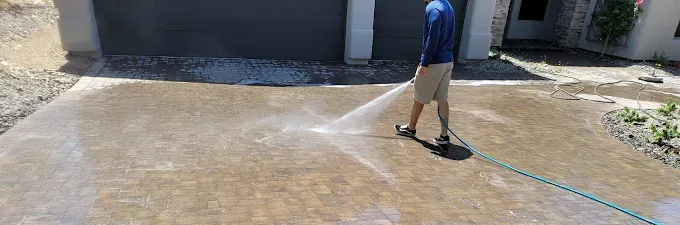
Quick answer: For fresh oil stains, start with oil absorbent, then use an alkaline concrete degreaser and rinse with pressure. For older stains, use a professional degreaser, hot water power washing, or a poultice-style oil remover that pulls oil from the concrete. For deep stains, one cleaning may improve the stain, but a second treatment may be needed.
Why Oil Stains Are Hard to Remove From Phoenix Driveways
Phoenix concrete takes a beating. Extreme sun, desert dust, monsoon runoff, sprinkler overspray, and vehicle fluids all work together to stain the surface. Concrete is porous, so oil does not just sit on top like a spill on tile. It soaks in.
Heat makes the issue worse. When motor oil, transmission fluid, power steering fluid, hydraulic fluid, or grease hits a hot driveway, it can spread quickly and penetrate deeper. By the time the stain turns dark brown or black, it may already be below the surface.
That is why basic pressure washing by itself is usually not enough. Pressure removes loose dirt from the surface. Oil stain removal requires chemistry first, pressure second.
What Is the Best Power Washing Solution for Oil Stains?
The best solution is not one single product. It is the right process. For oil-stained concrete, a strong cleaning process usually looks like this:
- Absorb as much fresh oil as possible before adding water.
- Apply the correct degreaser or oil stain remover.
- Let the chemical dwell long enough to break down the oil.
- Agitate the stain when needed.
- Use hot water power washing when the stain is heavy or greasy.
- Surface clean evenly to avoid wand marks.
- Rinse thoroughly and repeat if the stain has wicked deep into the concrete.
For Phoenix homeowners, this matters because concrete gets hot fast. If the chemical dries before it works, the stain may barely move. A professional cleaning company understands how to manage dwell time, rinsing, dilution, and runoff so the cleaning solution works before the sun dries it out.
Fresh Oil Spill vs Old Oil Stain
Before choosing a cleaner, identify whether the stain is fresh or old.
| Type of Oil Stain | What It Looks Like | Best First Step |
|---|---|---|
| Fresh oil spill | Wet, shiny, dark, spreads easily | Absorb first with oil dry, kitty litter, sand, or absorbent pads |
| Recent stain | Dark spot, still close to surface | Apply concrete degreaser, dwell, scrub, and rinse |
| Old stain | Brown or black spot baked into concrete | Use professional degreaser, hot water, or poultice cleaner |
| Deep embedded stain | Stain returns after drying | Multiple treatments or oil-pulling product may be needed |
Do Not Start With Water on a Fresh Oil Spill
This is a common mistake. If the oil is still wet, do not immediately blast it with water. Water can spread the oil across a larger area and push it into surrounding pores.
Start dry. Cover the stain with an absorbent material such as oil dry, clay absorbent, kitty litter, or sand. Press it into the oil. Let it sit. Sweep it up. Repeat if needed. Once the liquid oil is absorbed, then move to degreasing and power washing.
Homeowner tip: If a car leaks oil overnight, handle it the next morning if possible. The longer it sits in Phoenix heat, the harder it gets to remove.
Best Types of Cleaners for Driveway Oil Stains
Different stains require different chemistry. That is why professional power washing companies do not use one cleaner for every driveway. The right product depends on whether the stain is petroleum oil, food grease, rust, battery acid staining, tire marks, or mineral deposits.
1. Alkaline Concrete Degreasers
Alkaline degreasers are often the first choice for vehicle oil, food grease, dumpster pad grime, drive-thru lanes, and heavy organic buildup. They break down grease and oil so it can be lifted from the surface and rinsed away.
For a normal residential driveway, this may be enough if the stain is recent. For older stains, the degreaser may need more dwell time, agitation, and a second application.
Professional products such as EaCo Chem Hot Stain Remover are designed for food and petroleum oil staining on masonry and concrete. This type of chemistry is more appropriate for oil than bleach or general soap.
2. Hot Water Power Washing
Hot water is a major advantage when removing oil. Heat helps loosen grease and petroleum residue so the degreaser can work better. This is why restaurants, dumpster pads, parking lots, and commercial concrete often require hot water equipment rather than a cold water pressure washer.
Phoenix homeowners with heavy oil stains, leaky vehicle spots, or garage apron staining often get better results when degreaser and hot water are used together.
Valley Pro Power Wash also handles commercial pressure washing services, parking lot cleaning, and concrete cleaning where oil, grease, tire marks, and traffic buildup are more severe than a normal residential driveway.
3. Poultice Oil and Grease Removers
Some oil stains do not rinse out because the oil has soaked too deep. In those cases, a poultice cleaner can help. A poultice is designed to sit on the stain as it dries, pulling oil and grease out of the concrete.
PROSOCO Oil & Grease Stain Remover is an example of a poultice-style product made for stubborn oil and grease stains on concrete, pavers, stone, and other porous surfaces.
This type of cleaner is useful when a stain keeps coming back after the surface dries. That usually means oil is still below the surface and wicking upward.
4. Enzyme or Microbial Oil Removers
Some oil removal products use enzyme or microbial action to break down oil-based materials over time. These are not always instant, but they can be useful for deep oil contamination.
Ameripolish Oil Ingester is one example of an oil-specific product designed to consume and break down oil-based materials on concrete.
These products may be helpful when oil has soaked deep into the concrete and a standard rinse only improves the surface.
5. Solvent-Based Removers for Asphalt, Tar, and Heavy Petroleum Stains
Not every black stain is motor oil. Some stains come from asphalt sealer, roofing tar, construction residue, hydraulic fluid, or other petroleum-based materials.
PROSOCO Sure Klean Asphalt & Tar Remover is made for masonry and concrete stains such as asphalt, tar, grease, hydraulic oil, and motor oil. This is not the same as using a general household cleaner.
Products like this should be handled carefully, with proper personal protective equipment, label directions, runoff control, and surface testing.
Is F9 BARC Good for Oil Stains?
F9 BARC is one of the best-known professional stain removers in the pressure washing industry, but it is not the first product we would choose for normal driveway oil stains.
F9 BARC is primarily known for rust, fertilizer staining, orange battery stains, and similar mineral or acid-based staining. That makes it extremely useful for the right stain, but oil needs oil-focused chemistry.
In plain language: use oil removers for oil. Use rust removers for rust. Use mineral stain removers for mineral staining. The wrong chemical can waste time, cost money, or create uneven results.
Can Bleach Remove Oil From a Driveway?
Bleach is not the best solution for oil stains. Sodium hypochlorite can help with organic growth like algae, mildew, and some black organic staining, but motor oil and petroleum stains need degreasing chemistry.
If a driveway has algae and oil, those may be two separate problems. A professional may treat the organic growth with one method and the oil stain with another.
Can Dawn Dish Soap Remove Oil From Concrete?
Dish soap can help with very small, very fresh stains. It is better than doing nothing, especially if you catch the spill early. But for baked-in Phoenix driveway stains, dish soap usually is not strong enough.
The issue is depth. Once oil gets below the surface, a mild soap may clean the top but leave the darker stain underneath.
Can a Pressure Washer Alone Remove Oil?
Sometimes it can lighten the stain, but pressure alone is not the right solution. Too much pressure can scar or stripe the driveway, especially if a narrow tip is used too close to the surface.
On concrete, the cleaner should do the chemical work. The pressure washer should remove the broken-down contamination and rinse the surface evenly. This is where professional equipment makes a difference.
Why Surface Cleaners Matter on Driveways
If you use only a wand, you can leave lines all over the driveway. These are often called tiger stripes. They happen when one section gets more pressure than another.
A professional surface cleaner uses rotating nozzles under a controlled housing to clean more evenly. This gives the driveway a consistent appearance and reduces the chance of visible wand marks.
For oil stains, the process usually includes pre-treatment, dwell time, surface cleaning, and a full rinse. On heavy stains, the spot may be treated again after the main cleaning.
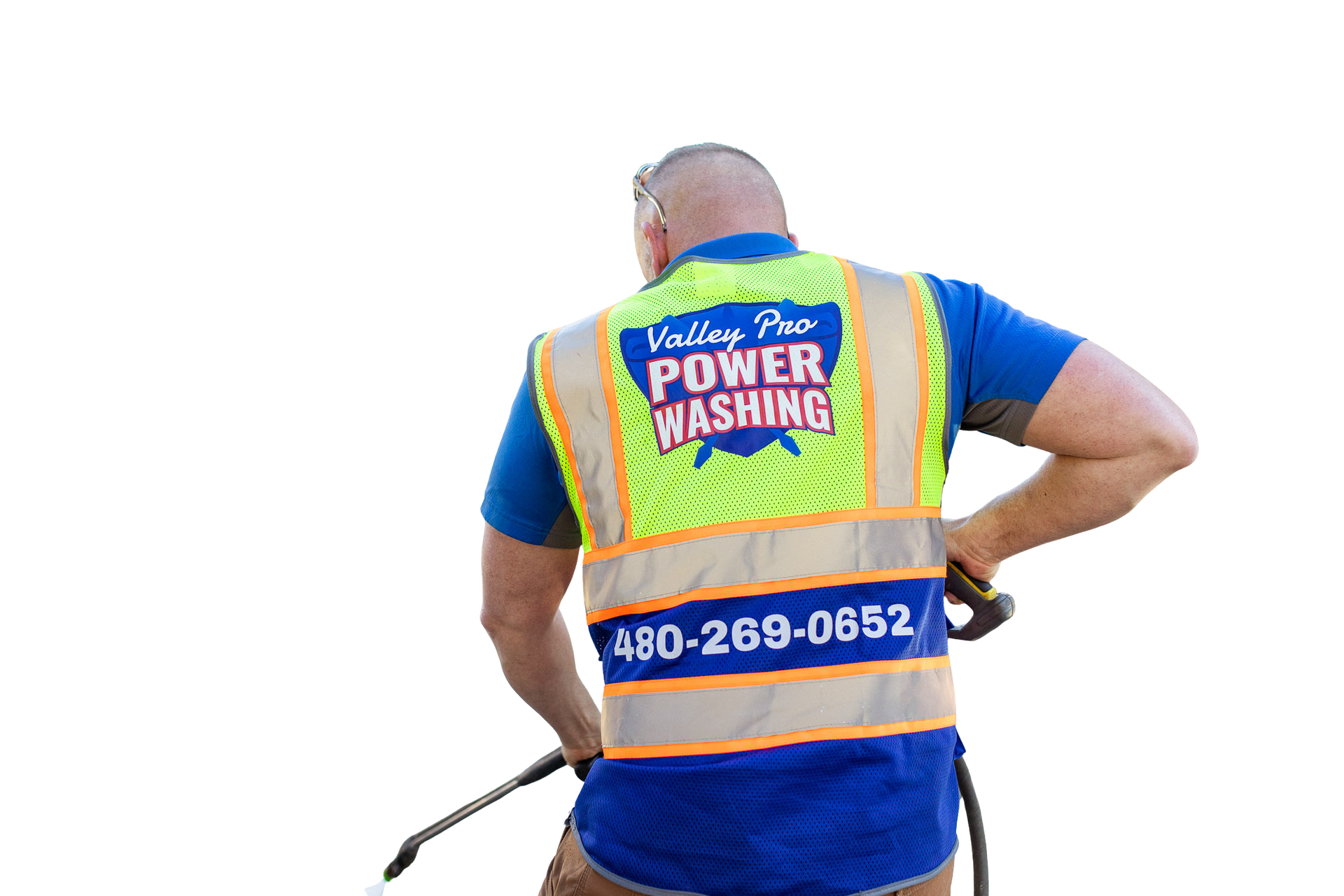
Step-by-Step: Best Way to Remove Oil From a Phoenix Driveway
Here is the general process used for many oil-stained concrete driveways. Every surface is different, so always test first and follow label directions.
Step 1: Identify the Stain
Look at the color, location, and texture. A black spot under a parked car is likely oil or transmission fluid. Orange stains near landscaping may be rust or fertilizer. White crusty buildup may be hard water or efflorescence.
This matters because each stain needs a different chemical.
Step 2: Absorb Fresh Oil
If the stain is still wet, cover it with absorbent material first. Do not rinse it across the driveway. Sweep up the absorbed material and dispose of it properly.
Step 3: Apply the Right Degreaser
Apply a concrete-safe degreaser or oil stain remover to the affected area. Let it dwell long enough to break down the oil, but do not let it dry completely in the Phoenix sun.
On hot days, early morning is usually better because the concrete is cooler and chemicals have more time to work.
Step 4: Agitate the Stain
For stubborn spots, agitation helps. A stiff brush can work the degreaser into the pores of the concrete. This is especially useful on older oil spots or rough concrete.
Step 5: Use Hot Water When Needed
Hot water improves grease and oil removal. It helps soften and lift petroleum residue that cold water may leave behind.
Step 6: Surface Clean the Driveway
A surface cleaner gives a more even result than a wand. This is important when cleaning the whole driveway, not just one spot.
Step 7: Rinse Thoroughly
Rinse the driveway fully so residue does not remain on the surface. Leftover degreaser can attract dirt or create uneven drying marks.
Step 8: Re-Treat Deep Stains
If the oil stain returns after the concrete dries, it may be wicking back up from below the surface. A second treatment, poultice cleaner, or oil-ingesting product may be needed.
What Results Should Homeowners Expect?
Newer oil stains can often be removed or dramatically improved. Older oil stains may improve significantly but not always disappear completely in one visit.
The biggest factors are:
- How long the oil has been there
- How porous the concrete is
- Whether the driveway is sealed
- Whether the stain was previously treated with the wrong product
- How hot the concrete was when the oil spilled
- The type of oil or fluid involved
A good contractor should be honest about this. Some stains can be removed. Some can be improved. Some deep stains require more than one treatment.
Oil Stains on Pavers, Stamped Concrete, and Sealed Driveways
Not all driveways should be cleaned the same way.
Pavers can absorb oil into individual stones and joint sand. Stamped concrete can be damaged by excessive pressure. Sealed concrete may react differently depending on the type of sealer. Some aggressive cleaners can dull, soften, or strip coatings.
If your driveway is decorative, sealed, colored, stamped, or made from pavers, test first and use a more cautious process. This is a good reason to hire a professional rather than risk permanent damage.
Why Phoenix Driveways Need a Different Cleaning Strategy
Driveway cleaning in Phoenix is different from driveway cleaning in cooler, wetter climates. The sun dries chemicals faster. Concrete gets hotter. Dust and sand act like abrasives. Monsoon storms can leave mud, organic debris, and mineral deposits behind.
Arcadia, Ahwatukee, Chandler, Tempe, Scottsdale, Mesa, and other Valley neighborhoods also have a lot of irrigated landscaping. Sprinkler overspray and shaded areas can create algae and mineral staining right next to oil spots.
That is why Valley Pro Power Wash uses surface-appropriate pressure, professional cleaning solutions, and a process designed for Arizona conditions.
Related Phoenix Power Washing Services
Oil stain removal is often part of a larger exterior cleaning project. Homeowners may also need patio cleaning, pool deck cleaning, sidewalk washing, house washing, or paver cleaning.
- Residential Power Washing in Phoenix
- Power Washing in Arcadia, Phoenix AZ 85018
- Commercial Pressure Washing Services
- Parking Lot Cleaning Services
- How Often Should Phoenix Homeowners Power Wash Their Driveways?
Helpful Manufacturer Resources for Concrete Stain Removal
These manufacturer resources are useful for understanding how different stain removal products are designed. Always read labels, safety data sheets, and product directions before using any chemical on concrete.
- EaCo Chem Hot Stain Remover for food and petroleum oil stains on masonry and concrete.
- PROSOCO Oil & Grease Stain Remover for stubborn oil and grease stains on concrete and other porous surfaces.
- PROSOCO Sure Klean Asphalt & Tar Remover for asphalt, tar, grease, hydraulic oil, and motor oil stains.
- Ameripolish Oil Ingester for oil-based stains that need more time to break down.
- F9 BARC for rust, fertilizer, and battery acid stains, not standard oil stains.
- EaCo Chem OneRestore for certain mineral and restoration stains on compatible surfaces.
What About DIY Oil Stain Removal?
DIY can work for small fresh stains. Start with absorbent material, then use a concrete-safe degreaser, scrub, and rinse. Avoid narrow pressure washer tips and do not hold the wand too close to the concrete.
DIY becomes risky when the driveway is older, decorative, sealed, cracked, or heavily stained. It is also risky when the stain may involve chemicals other than oil, such as battery acid, rust, fertilizer, paint, sealer, or tar.
If you are not sure what caused the stain, it is better to ask before applying random chemicals. Mixing the wrong products or using the wrong acid can create damage that is much harder to fix than the original stain.
When to Call Valley Pro Power Wash
Call Valley Pro Power Wash if the oil stain is old, large, dark, repeated from a vehicle leak, located on decorative concrete, or part of a larger driveway cleaning project.
Professional service is also a smart choice before selling your home, hosting guests, cleaning up after a tenant, or preparing a driveway for sealing.
If you want to see how another exterior cleaning company talks about driveway power washing in a different climate, this article from Green Pro Services in Illinois is a helpful related read: Frankfort IL Driveway Power Washing by Green Pro Services.
Get a Driveway Power Washing Estimate in Phoenix
Oil stains, tire marks, dust, monsoon grime, and hard water buildup can make a driveway look older than it really is. Valley Pro Power Wash helps Phoenix homeowners clean concrete safely and professionally.
Call or text (480) 269-0652 or request a free estimate online.
Request a Free Estimate Read Our Google ReviewsFrequently Asked Questions About Oil Stain Removal From Driveways
What is the best power washing solution for oil stains on concrete?
The best solution is usually a concrete-safe alkaline degreaser combined with proper dwell time, agitation, hot water power washing when needed, and even surface cleaning. Deep stains may require a poultice oil remover or enzyme-based oil treatment.
Will pressure washing remove oil stains from a driveway?
Pressure washing alone may lighten oil stains, but it usually will not fully remove them. Oil needs a degreaser or oil-specific stain remover before rinsing.
Can old oil stains be removed from concrete?
Many old oil stains can be improved, and some can be removed. However, deep stains that have soaked into porous concrete may need multiple treatments. In some cases, a faint shadow can remain.
Is hot water better for oil stain removal?
Yes. Hot water helps loosen grease and petroleum residue, especially when paired with the right degreaser. This is why hot water power washing is commonly used for oil-stained concrete, dumpster pads, drive-thru lanes, and parking lots.
Should I use bleach on driveway oil stains?
No. Bleach is not the best cleaner for motor oil or petroleum stains. Bleach is more useful for organic growth like algae and mildew. Oil stains need degreasing chemistry.
Can I use F9 BARC on oil stains?
F9 BARC is better suited for rust, battery acid staining, and fertilizer staining. For driveway oil stains, use an oil-focused degreaser, poultice cleaner, or oil-ingesting product.
How soon should I clean an oil spill on my driveway?
As soon as possible. Fresh oil is much easier to remove than oil that has baked into Phoenix concrete for days or weeks. Start by absorbing the spill before adding water.
Why does my oil stain come back after cleaning?
This usually means oil is still below the surface and is wicking back up as the concrete dries. A second treatment, poultice cleaner, or oil-ingesting product may be needed.
Is oil stain removal safe for pavers?
It can be, but pavers require a careful approach. Some cleaners can affect joint sand, sealers, or color. Always test first or hire a professional if the driveway is decorative or sealed.
Does Valley Pro Power Wash clean oil stains in Arcadia?
Yes. Valley Pro Power Wash serves Arcadia and the greater Phoenix area. You can learn more on the Arcadia power washing page.
How often should Phoenix homeowners power wash their driveway?
Most Phoenix homeowners benefit from driveway power washing at least once per year. Homes with heavy vehicle traffic, shade, sprinkler overspray, oil spots, or monsoon buildup may benefit from cleaning twice per year.
Can driveway cleaning help curb appeal before selling a Phoenix home?
Yes. A clean driveway improves the first impression of the home. Oil stains, tire marks, and dirt buildup can make a property look less maintained, even when the rest of the home is in good condition.
You might also like
Blog - Valley Pro Power Washing