How to Pressure Wash a Travertine Stone Pool Deck in Phoenix
Travertine is soft, porous, and allergic to acid. Here is the pressure, the chemistry, and the order of operations I use on Valley pool decks.
QUICK ANSWER
Clean a travertine pool deck at 600 to 1200 PSI using a surface cleaner and a pH neutral or alkaline stone safe detergent. Skip every acid product, and skip the 0 and 15 degree tips. Sweep the deck, wet the stone, apply cleaner and hold it wet for 8 to 10 minutes, agitate with a soft brush, pass the surface cleaner in overlapping rows, rinse toward a drain and away from the pool, then seal with a breathable penetrating sealer once the stone dries for 48 hours. Most Phoenix travertine decks run $150 to $400 to clean in 2026, with hard water or rust restoration quoted apart.
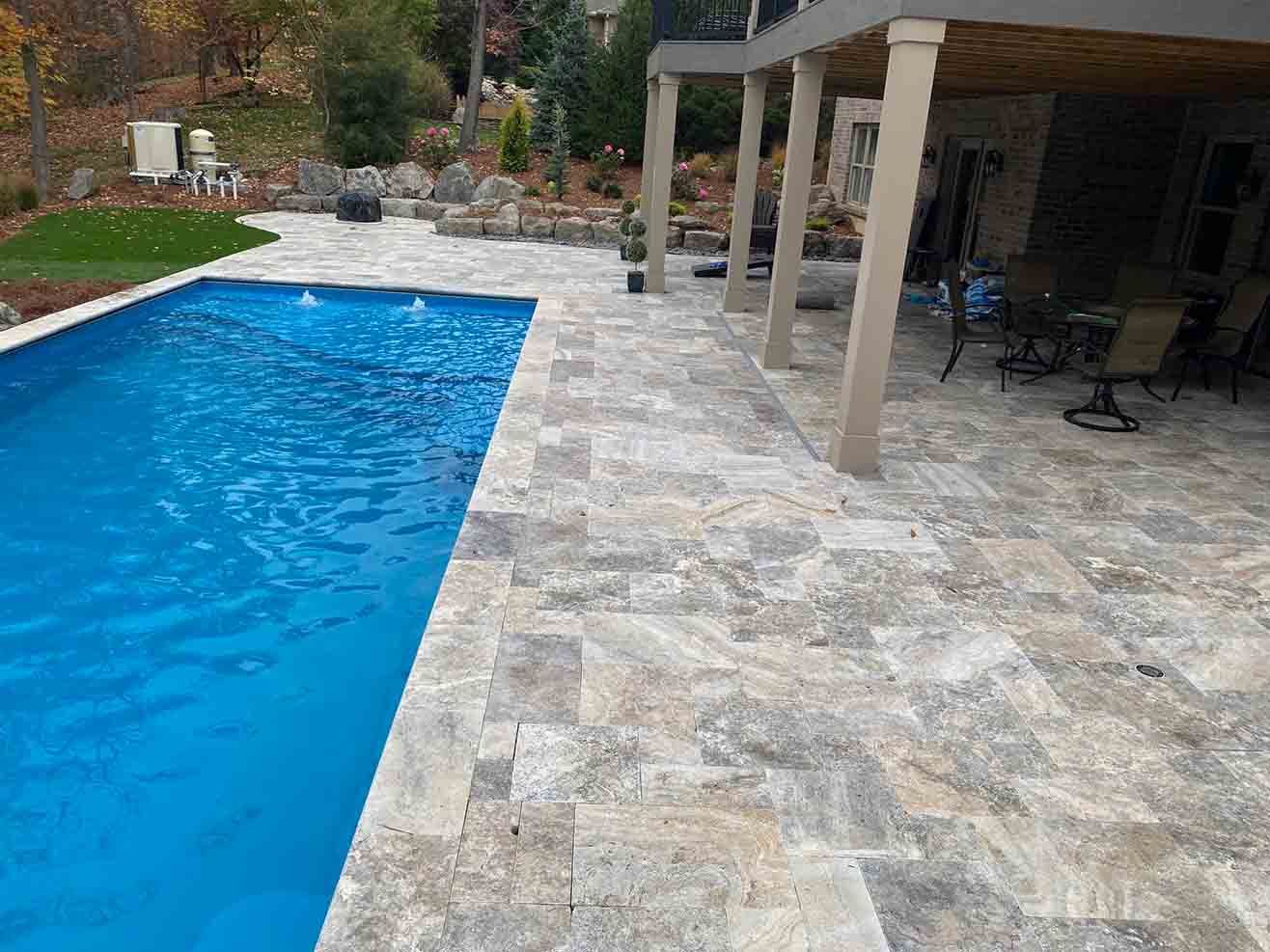
I have cleaned pool decks around Phoenix for ten years, and travertine sends me more damage calls than any other flatwork in the Valley. Not because the stone is fragile in normal use. Because it looks like concrete to a person holding a rented wand, and it behaves nothing like concrete once water hits it at 3000 PSI.
This guide walks the whole job. What the stone is, what pressure it tolerates, which chemicals eat it, the step order I follow on a paid job, and the two stains that need a different plan than a wash.
Can you pressure wash a travertine pool deck?
Yes, with the pressure dialed down and the chemistry chosen for stone. Travertine handles a surface cleaner at 600 to 1200 PSI without trouble. It does not handle a narrow tip held close, and it does not handle acid at any strength.
Most of what people call pressure washing a pool deck is closer to a soft wash. The detergent does the lifting. The water carries it off. Pressure is the smallest lever on the job, and turning that lever up is how decks get ruined.
Why travertine breaks the rules concrete taught you
Travertine is a form of limestone. The stone is calcium carbonate, the same mineral that forms the white crust on your pool tile. That one fact drives every decision on the job.
It is soft
Travertine sits around 3 to 4 on the Mohs scale. Concrete sits higher. A tip that leaves no mark on a driveway will cut a visible line into travertine on the first pass.
It is porous
Unfilled travertine carries open voids across the face. Sunscreen, body oil, and drink spills sink into those pockets and stay there until a detergent pulls them back out.
Acid dissolves it
Muriatic, sulfuric, phosphoric, and most off the shelf rust and hard water removers attack calcium. On travertine they eat the stone itself and leave dull white etch marks that no cleaning will bring back.
The joints are weak points
Pool deck travertine is often laid as pavers over a sand or mortar bed. High pressure blows joint sand out, undermines the setting bed, and starts the settling that turns into a trip hazard.
Filled travertine adds one more risk. The factory fills the natural voids with a cement or resin plug, and a narrow tip pops those fills right out. You end up with a pitted deck that needs a stone mason, not a washer.
What PSI is safe for a travertine pool deck?
Stay between 600 and 1200 PSI at the surface. I run a 16 inch surface cleaner with nozzles sized to hold the machine near 1000 PSI, and I keep a 40 degree tip on the wand for edges and coping.
| Tool or tip | Use on travertine | What happens if you push it |
|---|---|---|
| Surface cleaner, 600 to 1200 PSI | Yes, the main tool for the field of the deck | Even cleaning with no wand stripes |
| 40 degree white tip | Yes, for edges, coping, and steps | Safe at 12 inches or more of standoff |
| 25 degree green tip | Use with caution and long standoff | Starts to lift joint sand and open fills |
| 15 degree yellow tip | No | Cuts visible lines into the stone face |
| 0 degree red tip | No | Pits the stone in under a second |
| Turbo or rotary nozzle | No | Leaves swirl scars that never wash out |
| Hot water above 180F | Not needed | Flash dries detergent and can shock cold stone |
A quick field test settles any doubt. Pick a spot behind the pool equipment, run one pass at your intended setting, dry it with a towel, and look across the surface at a low angle. If the test patch reads brighter than the surrounding stone in texture and not just in color, back the pressure down.
What you need before the first drop of water
- Pressure washer with adjustable output, 3 to 5 GPM. Flow matters more than pressure on stone.
- Surface cleaner, 15 to 20 inch, with nozzles sized to hold 1000 PSI or below.
- Stone safe cleaner. A pH neutral or alkaline detergent built for natural stone. Read the label for the words limestone, marble, or travertine safe.
- Diluted sodium hypochlorite at 1 to 2 percent for algae and mildew in shaded corners, applied through a downstream injector.
- Soft bristle deck brush on a pole. Never a wire brush.
- Garden hose and a fan spray nozzle for pre wetting plants and rinsing.
- Plastic sheeting for pool equipment, light fixtures, and metal furniture bases.
- Breathable penetrating sealer rated for exterior stone in high UV.
Two items belong nowhere near this job: any product with acid in the ingredient list, and any topical film forming sealer. The first destroys the stone. The second turns a wet pool deck into a slide and peels under Arizona sun inside a season.
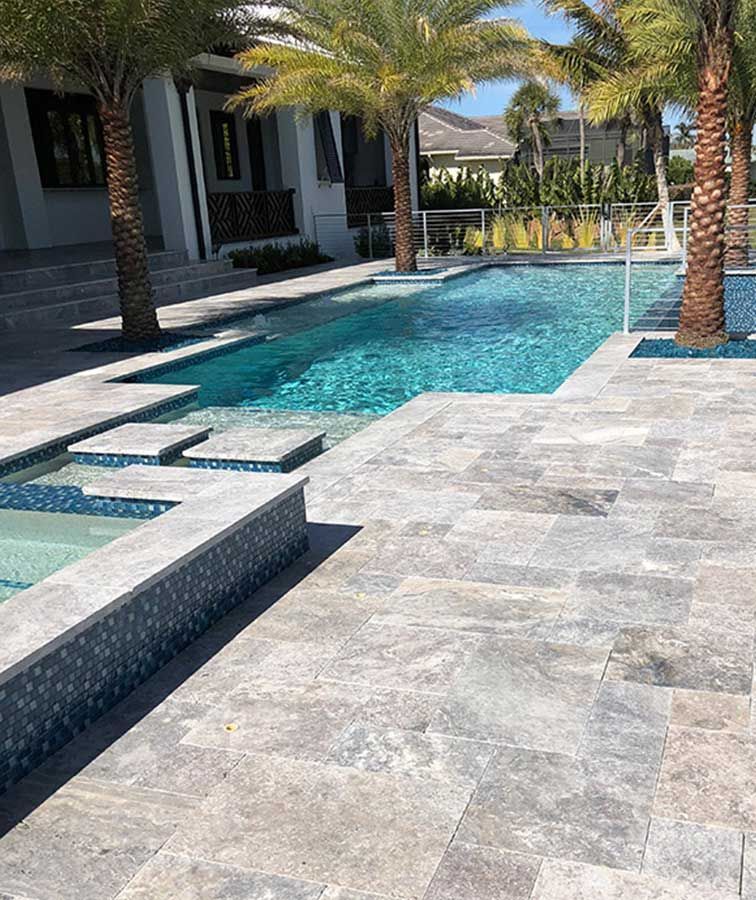
How do you pressure wash a travertine pool deck step by step?
Seven steps, in this order. The order matters more than the equipment.
Clear the deck and start early
Pull furniture, planters, mats, and the pool cleaner off the stone. In Phoenix, start between 5 and 8 in the morning from April through October. Deck surface temps pass 140F by mid morning in summer, and detergent that flash dries on hot stone leaves streaks you then have to chase.
Protect the perimeter
Soak the landscape beds and any turf inside the splash zone with plain water first, then cover pool equipment, low voltage lights, and metal furniture feet. Wet plants shed detergent instead of drinking it. Skip this step and you buy the homeowner new lantana.
Dry sweep, then pre wet the stone
Blow or sweep off dust, palo verde litter, and gravel. Gravel under a surface cleaner turns into a projectile. Then wet the whole deck with the garden hose. Wet stone accepts detergent without soaking it into the pores, and that is what keeps the cleaner working on the surface where the dirt is.
Apply cleaner and keep it wet
Downstream your stone safe detergent across the deck and hold a dwell of 8 to 10 minutes. Mist the surface with the hose if the sun starts pulling it dry. Add diluted sodium hypochlorite only on the shaded strips where algae and black mildew show, and rinse those areas first when you get to the rinse step.
Agitate the trouble spots
Work the soft brush over sunscreen shadows near the lounge chairs, the food and drink zone by the table, and the traffic path from the door to the steps. Brushing does the work high pressure would otherwise be asked to do, and the stone comes out whole.
Surface clean in overlapping rows
Run the surface cleaner in straight rows with a third of the head overlapping the last pass. Keep the head moving at a steady walking pace. On coping and steps, switch to the 40 degree tip at 12 inches or more of standoff and pull water away from the pool edge.
Rinse away from the pool, then let it dry
Rinse from the pool edge outward toward the deck drain or the yard. Detergent in the water causes foaming and throws the chemistry off. If runoff does reach the pool, test and rebalance before anyone swims. Give the deck 48 hours of dry time before any sealer goes down.
What Phoenix leaves on a travertine deck, and what comes off
Honest expectations save arguments later. Here is what I tell homeowners before I quote.
| What is on the stone | Where it comes from | Result from a proper wash |
|---|---|---|
| Dust film and monsoon grit | Desert wind and summer storms | Comes off in full |
| Sunscreen and body oil | Swim season and lounge chairs | Comes off with dwell time and brushing |
| Algae and black mildew | Shaded strips, drip lines, north walls | Comes off with diluted sodium hypochlorite |
| Food, drink, and grill grease | Outdoor kitchens and patio tables | Comes off with an alkaline degreaser |
| Leaf and berry tannin | Palo verde, mesquite, date palm drop | Lightens a lot, deep sets may ghost |
| Hard water scale | Sprinkler overspray and pool splash out | Needs a stone safe restoration, not a wash |
| Rust | Well and irrigation water, metal furniture feet | Needs a stone safe restoration, not a wash |
| Efflorescence haze | Salt migrating up from the setting bed | Reduces, and returns until the moisture source is fixed |
The same rule applies on concrete flatwork, which is why our pressure washing service page separates surface cleaning from stain restoration. They are two different jobs with two different price tags.
How do you remove hard water stains from travertine?
This is the hardest problem on the list, and the reason is chemistry. Hard water scale is calcium. Travertine is calcium. The acid that dissolves the stain dissolves the deck under it at the same rate. There is no acid strong enough to win that race.
What works instead:
- Light scale. A stone safe scale remover with a long dwell and repeat applications, followed by brushing. Slow, and it works.
- Heavy crust at the pool edge. Mechanical work. Fine diamond pads or a hone that takes the deposit down without cutting into the stone. This is stone restoration, and it belongs to a specialist.
- The source. Adjust the sprinkler heads that spray the deck. Scale that keeps returning is a plumbing question, not a cleaning question.
We hold F9 certification for chemical restoration and use it hard on concrete. On travertine we change the plan, because the product that saves a driveway ruins a pool deck. Anyone who quotes you an acid wash on travertine is telling you they have not done this before.
How do you remove rust stains from travertine?
Rust on a Phoenix deck traces back to two sources: irrigation water with iron in it, and metal furniture feet sitting on wet stone. The orange sinks into the pores and pressure will not touch it.
Standard concrete rust removers are acid based, so they come off the truck for concrete and stay on the truck for travertine. Stone safe rust products exist. They need a test patch behind the equipment pad, a controlled dwell, and a full rinse before the sun hits them. Expect two or three passes on an old stain, and expect a faint shadow on anything that has baked in for years.
Two prevention moves that cost nothing: put felt or rubber pads under every metal chair leg, and turn the deck facing sprinkler heads down.
Should you seal travertine after cleaning it?
Yes, and the sealer type is not a small choice.
Use a penetrating impregnating sealer. It soaks into the pores, blocks oil and water from following, and leaves the stone breathing and matte. Moisture from the pool and the soil below needs a way out, and a breathable sealer gives it one.
Do not use a topical film sealer on a pool deck. It sits on top, turns glass slick under bare wet feet, traps vapor beneath it, and peels in sheets after two Arizona summers. Every peeling deck I get called to look at was sealed with the wrong product by someone chasing a wet look.
Timing: 48 hours of dry stone, temperature under 90F, and no rain in the forecast. In the Valley that means late fall through spring, or a first light start in the summer. Reseal every two to three years. Our sun runs the clock faster than most markets.
What does it cost to clean a travertine pool deck in Phoenix?
Pool deck cleaning runs $150 to $400 for most Valley homes in 2026. Restoration work on hard water or rust gets quoted after an inspection, because the answer depends on how deep the deposit sits.
| Service | 2026 Phoenix price | Notes |
|---|---|---|
| Pool deck or cool deck cleaning | $150 to $400 | Low pressure method sized to the surface |
| Patio, paver, or stone patio | $120 to $300 | Lower pressure protects joint sand |
| Rust or hard water restoration | $150 to $500 and up | Quoted on inspection, stone safe method |
| Automatic pool cover soft wash | $150 to $300 | See our pool cover cleaning page |
| Sealing after cleaning | Quoted by square footage | Penetrating sealer, booked as a second visit |
Full surface by surface numbers live in our 2026 Phoenix pressure washing price guide. Bundling helps here. Adding a deck to a scheduled house washing visit costs less than booking it on its own, since the setup happens once. Want your number? Send us the deck details and we will price it.
Five mistakes I get called out to fix
- Acid on the stone. A homeowner buys a jug labeled for concrete rust, and the deck comes out with dull white blotches. That etch is missing stone. Cleaning will not restore it and honing is the only route back.
- A turbo nozzle. Swirl marks in a spiral pattern across the field of the deck, visible from the second story for the life of the stone.
- Blown joints. Narrow tips in the seams strip the sand, water gets under the pavers, and by the next monsoon the deck has settled into a lip at the door.
- Cleaner dried in the sun. A midday start in July with detergent flashing off on 145F stone. The streaks it leaves take a second wash to clear.
- Topical sealer on a wet use deck. Slick when wet, cloudy inside a year, peeling by year two. Stripping it costs more than the original job.
Property managers dealing with shared pool areas run into the same list at scale. Our Phoenix HOA exterior cleaning checklist covers deck frequencies and scope language for common areas.

Frequently asked questions
Can you pressure wash travertine without damaging it?
Yes, at 600 to 1200 PSI with a surface cleaner and a stone safe detergent. Damage comes from narrow tips, turbo nozzles, and acid products, not from washing the stone.
What PSI is safe for a travertine pool deck?
Between 600 and 1200 PSI at the surface. Use a surface cleaner for the open field and a 40 degree tip at 12 inches or more of standoff for edges, coping, and steps.
Is soft washing better than pressure washing for travertine?
The two work together. Soft wash chemistry lifts the sunscreen, oil, and algae, and a low pressure surface cleaner rinses it off with an even finish. Chemistry does the cleaning and pressure does the carrying.
Can I use bleach on a travertine pool deck?
Diluted sodium hypochlorite at 1 to 2 percent handles algae and mildew on travertine when you pre wet the plants and rinse fast. Do not pour it straight from the jug, do not let it dry on the stone, and do not expect it to touch hard water scale or rust.
How do I remove hard water stains from travertine?
Use a stone safe scale remover with a long dwell and repeat passes for light deposits. Heavy crust at the pool edge needs mechanical honing by a stone restoration pro. Acid removes the stain and the stone together, so it stays off the deck.
Will pressure washing strip the sealer off my travertine?
A penetrating sealer sits inside the pores and survives a low pressure wash. A topical film sealer will haze or lift, which is one more reason a pool deck should carry a penetrating product. Plan on resealing every two to three years in Phoenix sun either way.
How often should a Phoenix travertine pool deck be cleaned?
Once a year for most homes. Twice a year for decks under trees, near open desert, in heavy sprinkler overspray, or at rentals and short term stays where swim traffic runs all season.
How much does it cost to power wash a travertine pool deck in Phoenix?
$150 to $400 for most Valley pool decks in 2026, based on square footage, condition, and access. Hard water or rust restoration is quoted after an inspection at $150 to $500 and up.
Should I clean the deck before or after the monsoon?
After. Storm dust and runoff undo a summer cleaning inside a week. October and November give you clean stone plus the temperatures a sealer needs to cure.
Do you clean travertine outside of Phoenix?
Yes. We work across the Valley including Scottsdale, Tempe, Chandler, Gilbert, Mesa, and Ahwatukee. See our service areas page for the full list.
Get a free Phoenix pressure washing quote
Tell us about the deck and we will send a firm price. Most quotes go out the same day. No site visit needed on standard residential work.
Request received
Thanks for reaching out. Thomas will follow up with a firm price, and most quotes go out the same day. For a faster answer, text photos of the deck to (480) 269-0652.
Send a photo of your deck and get a price today
Text a picture of the stone to (480) 269-0652 and we will tell you what will come out and what will not before you spend a dollar. Free same day quotes across the Phoenix metro.
GET A FREE QUOTE CALL (480) 269-0652You might also like
Blog - Valley Pro Power Washing