
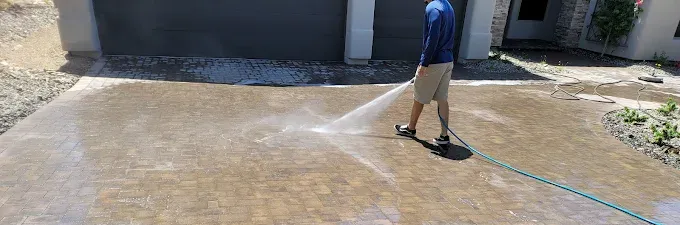
Driveway & Concrete Cleaning in Phoenix, AZ
Oil stains, rust, mineral deposits, algae, and monsoon grime — removed with chemistry first and pressure second, matched to your concrete, not forced on it.
What does driveway and concrete cleaning in Phoenix include? Valley Pro Power Wash cleans driveways, sidewalks, walkways, and garage aprons using degreasers, hot water power washing, and surface cleaners matched to the surface and the stain. Concrete is porous, so oil and stains soak in rather than sitting on top. The cleaner breaks the bond between the stain and the concrete first; pressure then rinses it away evenly.
Driveways & Concrete Surfaces We Clean
Every stain responds to a different method. Identifying the stain first — surface dirt, oil, rust, mineral deposits, or organic growth — is what sets the right treatment and the right expectation for results.
Driveways
Standard poured concrete, stamped concrete, pavers, and sealed driveways. Pressure is matched to the concrete's age and condition — stamped concrete, pavers, and exposed aggregate need lower pressure and should never be treated like a basic slab.
Sidewalks & Walkways
Front walks, sidewalks, and entry paths collect dust, tire marks, algae, and mineral staining from sprinklers. Cleaned with the driveway in one visit for an even look across the front of the home.
Oil & Fluid Stains
Motor oil, transmission fluid, power steering fluid, hydraulic fluid, and grease soak into porous concrete and repel water, so pressure alone will not remove them. Treatment starts with absorbent material on fresh spills, then a concrete degreaser, dwell time, and hot water power washing when the stain is heavy.
Rust & Mineral Stains
Orange streaks from sprinkler water, fertilizer, or metal items, and white chalky rings from hard water, need chemical restoration applied in stages — not more pressure. Pressure will not remove rust or mineral deposits.
Algae, Mold & Efflorescence
Green algae in shaded and sprinkler-wet areas, black mold after monsoon events, and efflorescence — white mineral salt deposits common in Arizona's mineral-heavy water — are treated as organic and mineral problems, separate from oil stains.
Pavers, Stamped & Sealed Concrete
Pavers absorb oil into individual stones and joint sand. Stamped and sealed concrete can be dulled or stripped by aggressive cleaners. Decorative and sealed surfaces get a test spot first and a more cautious process.
Our Driveway Cleaning Process
The best solution is not one product. It is the right process, adjusted for the stain, the surface, and Phoenix heat — chemicals must not dry on the surface before they have time to work.
1. Inspect & Identify the Stain
Color, location, and texture tell us what the stain is: a black spot under a parked car is likely oil; orange stains near landscaping may be rust or fertilizer; white crusty buildup may be hard water or efflorescence. Each stain needs a different chemical.
2. Absorb & Pre-Treat
Fresh oil is absorbed dry first — never blasted with water, which spreads it. Then a concrete-safe degreaser or stain remover is applied and given dwell time to break the oil down, with agitation on stubborn spots.
3. Hot Water & Surface Cleaning
Hot water loosens grease and petroleum residue so the degreaser works better. A surface cleaner with rotating nozzles rinses evenly under a controlled housing, so the driveway comes out one even color instead of striped wand marks.
4. Rinse & Re-Treat Deep Stains
The driveway is rinsed thoroughly so no residue is left to attract dirt. Deep stains that wick back up as the concrete dries may need a second treatment or a poultice-style oil remover that pulls oil out as it dries.
Why Phoenix Concrete Needs Its Own Approach
Phoenix driveways face a different set of problems than driveways in cooler, wetter climates. Concrete is porous, and in extreme heat its pores expand and absorb contaminants more deeply. Monsoon runoff from late June through September carries dirt, sediment, and organic matter onto the concrete, and prolonged UV exposure oxidizes sealers and accelerates surface breakdown.
That is why the recommended schedule for Phoenix homeowners is power washing at least once a year, with twice a year ideal for most homes: once in October or November, after monsoon season clears deposits and algae, and again in March or April, before summer heat bakes winter dust and pollen into the surface. Cleaning also prepares the surface for resealing, which closes the pores and slows UV degradation.
For current pricing, see the pricing page. No price is stated on this page. Driveway cleaning can also be bundled with house washing, window cleaning, and patio cleaning — see bundle options.
Send A Photo, Get A Price
HOA Notices in Chandler & the East Valley
HOA courtesy letters about driveway stains are common in Chandler after monsoon season, when dust, oil drips, and sprinkler rust show up on light concrete. For a quote, send a wide photo of the driveway, close-ups of the stains, the part of the notice describing the problem, your address, and your correction date — and cover your HOA account number before sending the notice.
Valley Pro reviews the photo, tells you whether the driveway needs a standard wash or stain treatment, sends a firm quote, and confirms open dates before your deadline. Surface dirt and fresh oil clean up in one visit; old oil, rust, and mineral stains lighten with treatment but may not disappear, and you are told that before the job starts. Before-and-after photos and a paid invoice are provided as proof the work was done. Whether the work meets your HOA's standard is the HOA's decision — approval is not guaranteed. Read the Chandler HOA driveway guide and the HOA and property manager page for the full picture.
Why DIY Driveway Cleaning Goes Wrong
A garden hose will not touch baked-in oil, and a cheap pressure washer usually only lightens the surface. The common mistakes are starting with water on a fresh spill, using the wrong chemical for the stain, and using too much pressure too close to the surface.
Water Spreads Fresh Oil
Blasting a wet oil spill pushes oil across a larger area and deeper into surrounding pores. Absorb it dry first, then degrease.
Wrong Chemical, Wrong Stain
Bleach does not remove motor oil — it helps with organic growth. F9 BARC is for rust and mineral staining, not oil. Dish soap helps only very small, very fresh spots. Each stain needs its own chemistry.
Etching & Tiger Stripes
Too high a PSI, too narrow a nozzle, or working too close can etch or pit concrete, especially on older driveways. A wand alone leaves uneven tiger stripes; a surface cleaner rinses evenly. Commercial concrete — parking lots, dumpster pads, and storefronts — is covered on the commercial power washing page.
Serving Homes Across the Phoenix Valley
Valley Pro Power Wash is a Phoenix, AZ company. Start with the residential pressure washing hub for the full list of home exterior services.
Driveway Cleaning FAQs
How often should a Phoenix driveway be power washed?
At least once a year, with twice a year ideal for most homes. The best timing is October or November after monsoon season ends, and again in March or April before summer heat bakes debris into the surface.
Can pressure washing damage concrete?
When done correctly, no. Standard residential concrete driveways handle 2,000 to 3,000 PSI safely. Using too high a PSI, too narrow a nozzle, or working too close can etch or pit concrete, especially on older driveways. Stamped concrete, pavers, and exposed aggregate require lower pressure.
Will oil stains come out completely?
Fresh stains can often be removed or dramatically improved. Older oil stains may improve significantly but not always disappear completely in one visit. Deep stains may need a second treatment or a poultice-style oil remover, and an honest assessment is given before the job starts.
Should I put water on a fresh oil spill?
No. Start dry: cover the spill with absorbent material such as oil dry, kitty litter, sand, or absorbent pads, press it in, let it sit, and sweep it up. Water can spread fresh oil and push it into nearby concrete pores.
Does bleach remove oil from concrete?
No. Bleach can help with organic growth like algae and mildew, but motor oil and petroleum stains need degreasing chemistry. If a driveway has algae and oil, those are two separate problems.
Should a driveway be sealed after washing?
Sealing closes the pores in concrete, making it harder for oil, algae, and mineral deposits to penetrate, and in Phoenix it also slows UV degradation of the surface. Most professionals recommend resealing every two to three years after a thorough cleaning. Cleaning prepares the surface for resealing.
Can driveway cleaning help with an HOA notice?
Yes. Send a photo of the driveway, close-ups of the stains, the part of the notice describing the problem, your address, and your correction date for a quote, and you will be told whether the driveway needs a standard wash or stain treatment. Before-and-after photos and a paid invoice are provided as proof the work was done. Whether the work meets the HOA's standard is the HOA's decision.
Get a Free Driveway Estimate
Send a photo of the stain or call today. We will identify the surface and the stain, recommend the right process, and give you a firm quote before any work starts.